
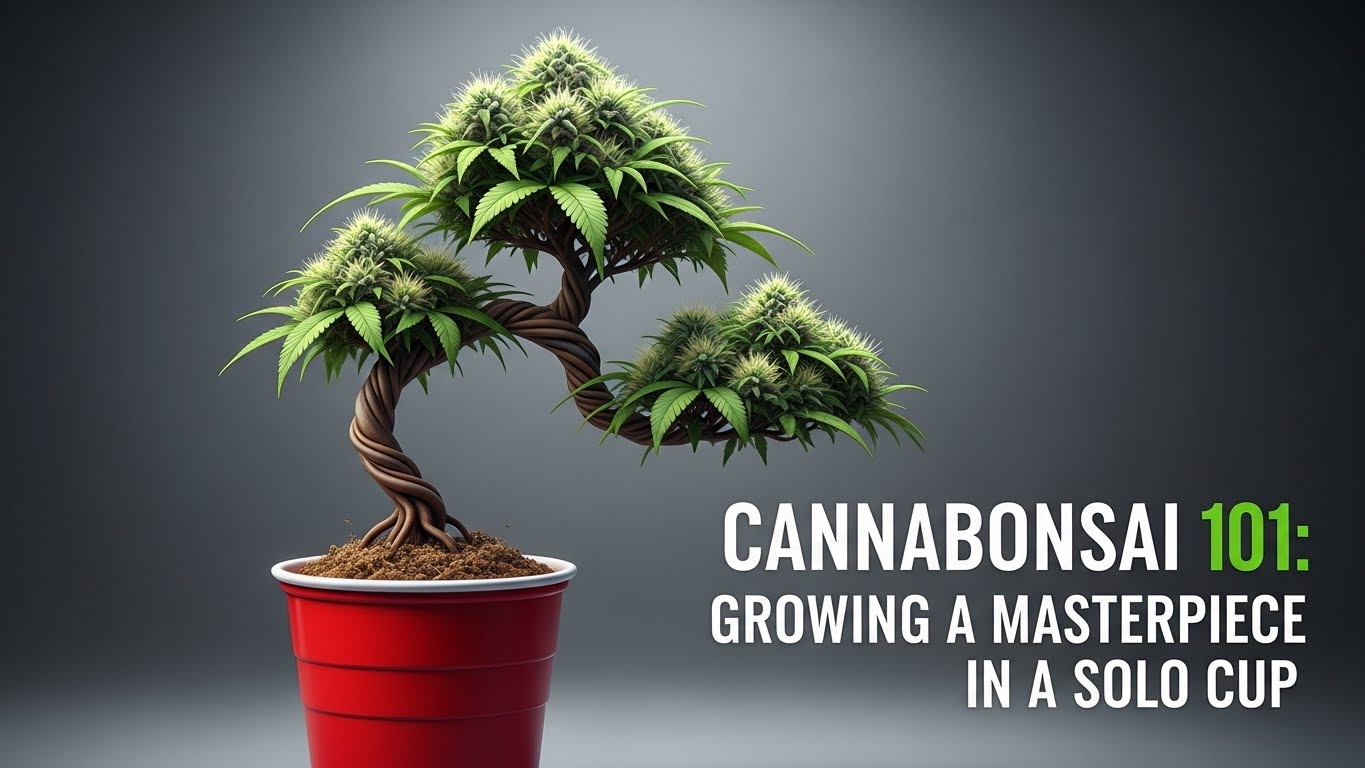
Cannabonsai 101
You’ve seen the photos—tiny, ancient-looking trees dripping with resin, sitting inside a plastic cup. It looks like magic, but it's pure science. Welcome to the elite level of micro-cultivation.
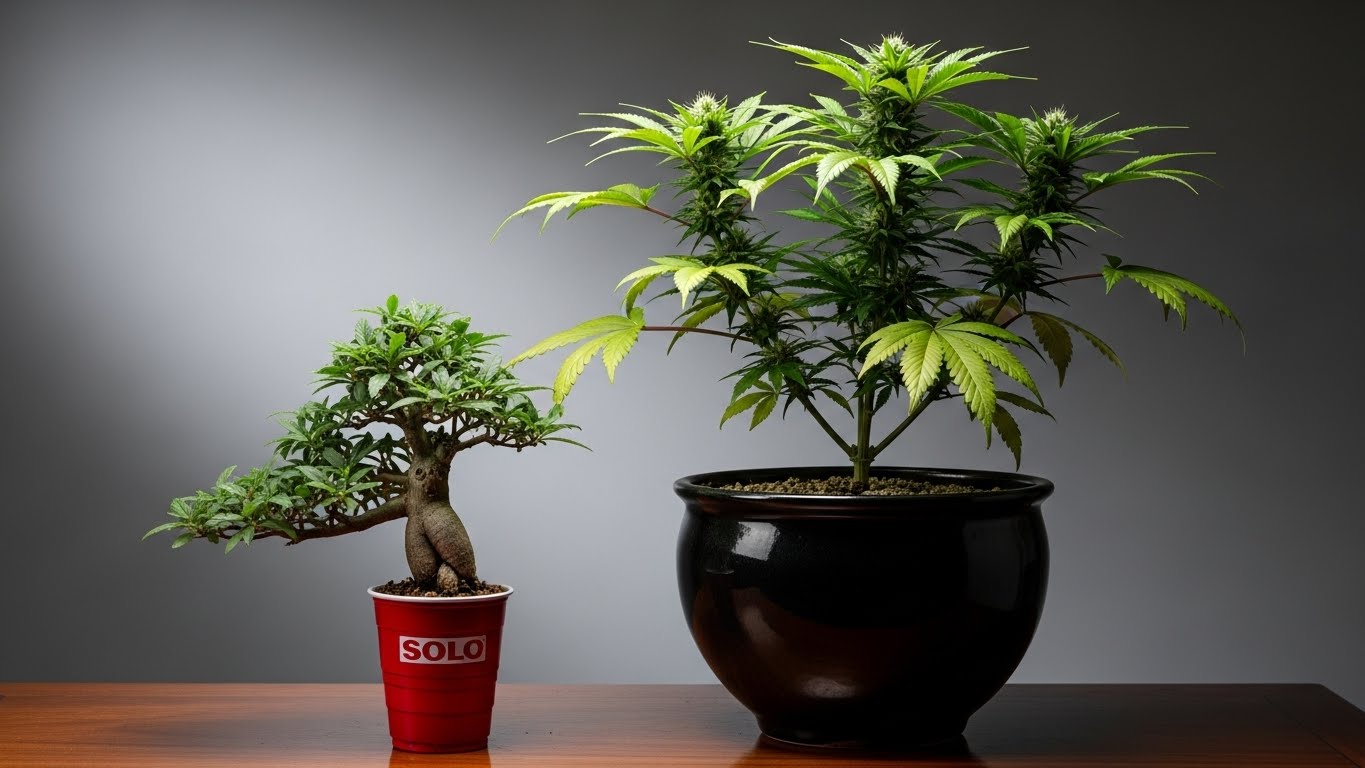
Look, we’ve all grown a plant in a 5-gallon bucket and felt like a king. But you want to know what separates the hobbyists from the masters? The Solo Cup Challenge. It’s the ultimate flex in the cannabis world. You aren't just growing weed; you're engineering a living sculpture.
Cannabonsai is where the ancient wisdom of Japanese horticulture meets the high-speed intensity of modern weed genetics. Usually, a bonsai takes thirty years to look "old." We’re going to do it in ninety days. We’re talking about manipulating plant intelligence and biological cues to trick a six-foot plant into thriving in a 16-ounce vessel.
1. The Science of the Struggle: Why a Solo Cup?
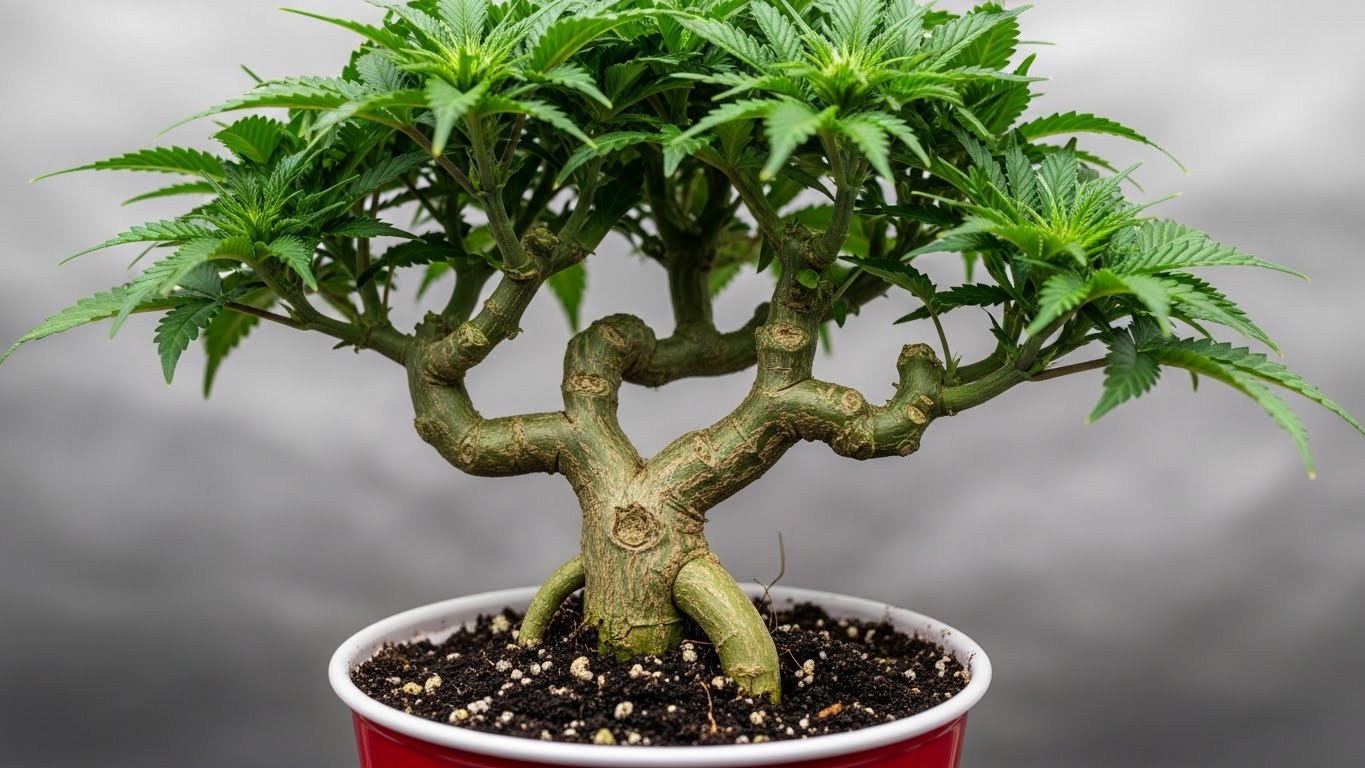
In the streets, we call it "stressing the bag." In horticulture, it’s called root impedance. When a taproot hits a plastic wall, it sends a hormonal SOS to the rest of the plant. It says, "Yo, we’re out of space!"
This triggers a biological feedback loop. The plant naturally slows its metabolism, shortens its internodal spacing (the gap between branches), and shrinks its leaves. This is the "Bonsai Effect." If you do this in a 5-gallon pot, the plant just gets huge. In a Solo cup, the plant is forced to look like a miniature version of an ancient oak tree. It’s beautiful, it’s difficult, and it requires you to be on your game every single day.
2. Selecting the Engine: Autoflowers are King
You cannot do this with just any seed you found in a bag. If you try to grow a massive photoperiod Sativa in a cup, you’re going to have a bad time. You need a specialized engine. You need Autoflowers.
Autoflowers have an internal clock. They don't care about light cycles; they flower when they're ready. More importantly, they have the biological drive to push through root stress. Even when they're "pot-bound," they’ll keep flowering because their DNA is programmed to finish before the winter hits.
The Elite Cultivars (2025 Picks)
If you want a winner, stick to these breeders:
- Mephisto Genetics (Sour Stomper): The gold standard. Resilient, frosty as hell, and handles nutrient mistakes like a champ.
- Fast Buds (Banana Purple Punch): If you want that deep purple/magenta look for your art piece, this is the one. Fast finish, heavy resin.
- Royal Queen Seeds (Titan F1): True F1 vigor. These are genetically identical, so if you’re running a row of cups, they’ll all behave the same way.
3. Substrate Secrets: Why Soil is for the Weak
In a 16-ounce cup, soil is a trap. Soil relies on a buffer that gets used up in three weeks. Once that buffer is gone, your plant will starve or the pH will crash. If you want to grow a masterpiece, you use Coco Coir.
Coco is inert. It’s basically hydroponics in a cup. It holds 30% oxygen even when it’s soaking wet. This allows for High Frequency Fertigation (HFF)—which is fancy talk for "watering it five times a day." By constantly flushing the roots with fresh nutrients, you can support a massive canopy in a tiny space.
The Blunt-Proof Substrate Recipe:
- 70% Buffered Coco Coir: Treated with Cal-Mag so it doesn't steal your nutrients.
- 30% Perlite: For maximum oxygenation. We don't want soggy roots.
- Ballast: 2cm of heavy stones at the bottom so your top-heavy tree doesn't tip over.
4. The Feeding Table: Precision is Performance
In a Solo cup, you are the plant's life support. If you miss a feeding, the salts build up, the EC spikes, and your leaves will look like they went through a toaster. You need to follow the targets. If you're struggling with leaf color or spots, check our survival guide for plant problems to diagnose it fast.
Table 1: EC and pH Targets for Solo Cup Mastery
| Growth Stage | Frequency | Target pH | Input EC | Focus |
|---|---|---|---|---|
| Seedling (Wk 1-2) | 1x Daily | 5.8 - 6.0 | 0.4 - 0.6 | Roots |
| Early Veg (Wk 3-4) | 1x - 2x | 5.8 - 6.0 | 0.8 - 1.1 | Nitrogen |
| Late Veg (Wk 5) | 2x - 3x | 5.8 - 6.1 | 1.2 - 1.4 | Structure |
| Stretch (Wk 6-7) | 3x - 4x | 5.9 - 6.2 | 1.4 - 1.6 | Cal-Mag |
| Peak Flower (Wk 8-10) | 4x - 5x | 6.0 - 6.3 | 1.6 - 1.9 | P/K Bloom |
5. Aesthetic Theory: Bending the Will of the Plant
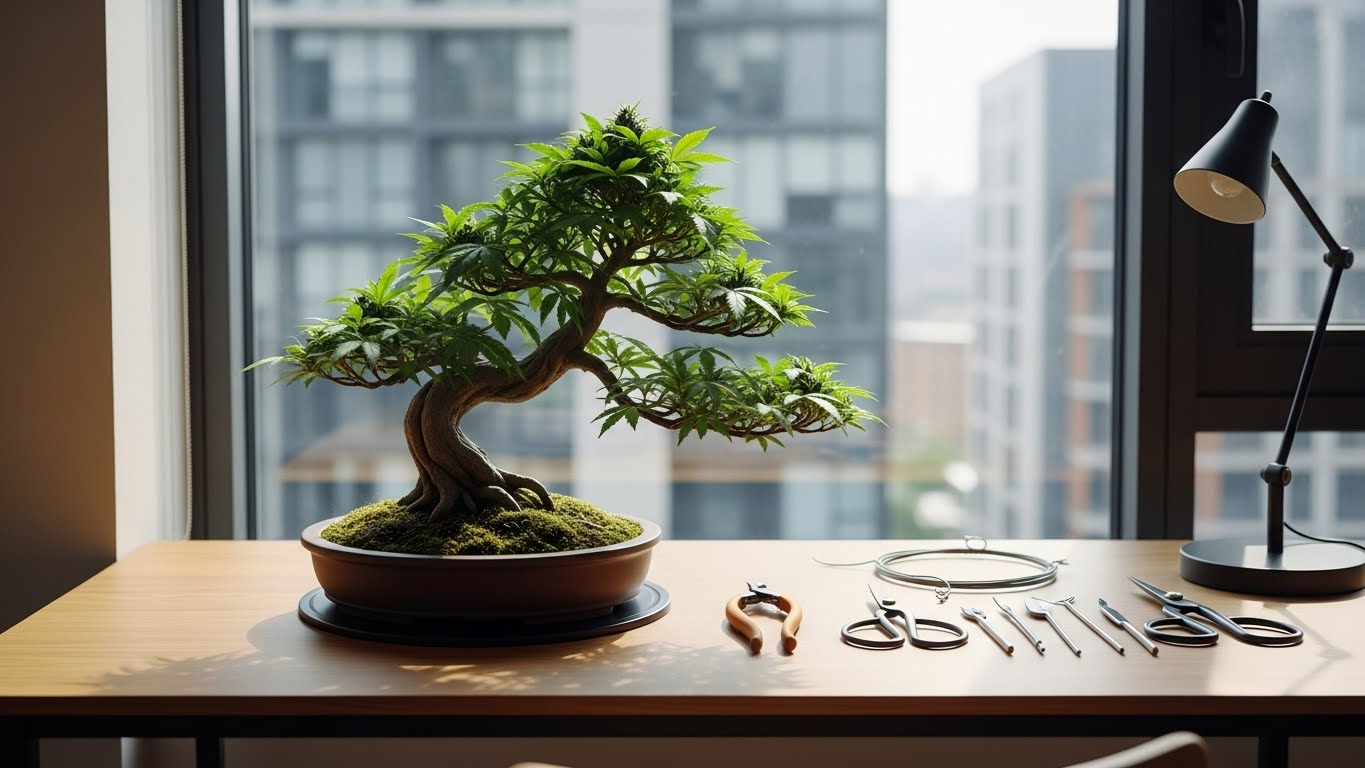
A "Christmas tree" shape is boring. We want struggle. We want age. This is where Wiring comes in. You wrap anodized aluminum wire around the stem and bend it into submission.
But be careful—cannabis stems are hollow. If you bend too hard, you’ll hear a "snap" that will break your heart. You have to support the branch with your thumbs and move the wire, not the branch.
The Three Pillars of Style:
- Informal Upright (Moyogi): A sinuous "S" shape. It looks like a tree that fought the wind for a century.
- Windswept (Fukinagashi): All branches flow in one direction. Think of a tree on a cliffside.
- Root-Over-Rock (Sekijoju): The holy grail. You grow the roots over a textured stone (like Dragon Stone) and slowly wash the soil away over 8 weeks until the roots look like woody tentacles gripping the rock.
6. Advanced Technique: The Root-Over-Rock Protocol
Want that "Sekijoju" look? Here is the secret sauce. You don't just put a rock on top of the soil. You bury the whole thing.
"The roots must believe they are underground to thicken. If you expose them too early, they stay thin and hairy. If you wait, they become woody armor."
You mount your seedling on the rock, wrap it loosely in teflon tape, and bury the whole rock in the Solo cup. Around week 4, you start "the slow reveal." Every time you water, wash away 1cm of soil. By harvest time, the rock is exposed, and the roots have hardened into bark. It looks like something out of a fantasy novel.
7. Harvesting the Art
You’re not going to get a pound off this. You’re looking at 15 to 30 grams of top-shelf headstash. But since it’s such a small amount, it’s easy to mess up the dry. If it dries in 2 days, it’ll smell like hay.
Hang the whole plant intact. Put it in a cardboard box to slow the drying down to 7-10 days. When the small stems snap, put those buds in a small 4oz mason jar. Don't use a big jar—too much air will ruin your terpene profile. For more on terpene preservation, see our deep dive on sun-grown vs indoor quality.
Table 2: Wiring Materials Comparison
| Material | Flexibility | Holding Power | Verdict |
|---|---|---|---|
| Anodized Aluminum | High (Soft) | Moderate | Best for Beginners. Won't snap brittle stems. |
| Annealed Copper | Low (Stiff) | Very High | Pro use only. Can "strangle" fast-growing weed. |
Troubleshooting the Micro-Grow
In a cup this small, things go south fast. Here is your survival matrix:
| Symptom | Probable Cause | Immediate Action |
|---|---|---|
| Rusty spots on leaves | pH Swing / Cal-Mag deficiency | Flush with 3x volume, re-buffer with Cal-Mag. |
| Tips burnt & curled | Salt buildup (High EC) | Flush with low EC water until runoff is clear. |
| Green algae on soil | Light hitting the medium | Cover topsoil with clay pebbles or foil. |
| Plant keeps tipping over | Center of gravity issues | Glue cup to a heavy tile or ceramic coaster. |
Conclusion: The Masterpiece Realized
Cannabonsai is a testament to the plasticity of life. You’ve taken a plant genetically coded to hit the ceiling and convinced it to thrive in a pint of coco. It’s a meditative, difficult, and incredibly rewarding journey.
Whether you’re doing it for the "Solo Cup Challenge" bragging rights or just to have a beautiful living art piece on your desk, the discipline makes you a better grower. You learn to listen to the plant. You learn that in the garden, as in life, sometimes the most beautiful things come from the greatest constraints.
Stay tuned to BluntTalkzz for more elite-level grow strategies. Now go grab a cup and get to work.