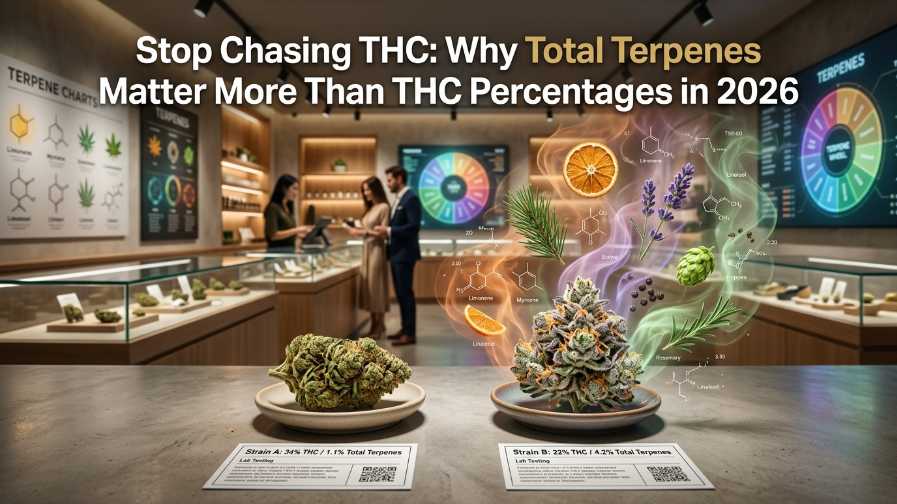


If we go back five years ago, nobody was really paying attention to the terp game in their cannabis. It was all about the highest THC levels. As a matter of fact New Jersey dispo’s weren’t even listing total terps on their menus until about 6 months ago. This is how much of a non issue it was. Fast forward to 2026, and you will notice that terpenes are all that people talk about now, and for good reason! In this article Blunttalkzz will break down how high THC levels and no or small supporting terpene profiles, often lead to flat highs that either were off quick or put you to sleep. It has been proven that cannabis strains with rich terpene profiles, that test 2% or over, produce a much richer all around high for the smoker. We will talk about why total terps are more important than total THC in 2026, and why flavonoids are the driving force to a good strain.
Why Everyone Became Obsessed With THC
To understand how we finally woke up to the power of terpenes, you have to understand how we got brainwashed by THC in the first place. For decades, the global cannabis narrative was chained to a singular molecule: delta-9-tetrahydrocannabinol (THC). When weed was heavily stigmatized and completely illegal, the metric for "good" weed was simple—how fast and how hard does it get you stoned?
As the market transitioned from Ziploc bags in the legacy market to sleek, multi-billion-dollar legal dispensaries, regulators and corporate suits carried over this flawed metric. They basically equated THC percentage directly with quality. Think about it like alcohol: if you only cared about getting drunk as fast as possible, you’d only drink Everclear. But nobody drinks Everclear with dinner, because taste, experience, and nuance actually matter.
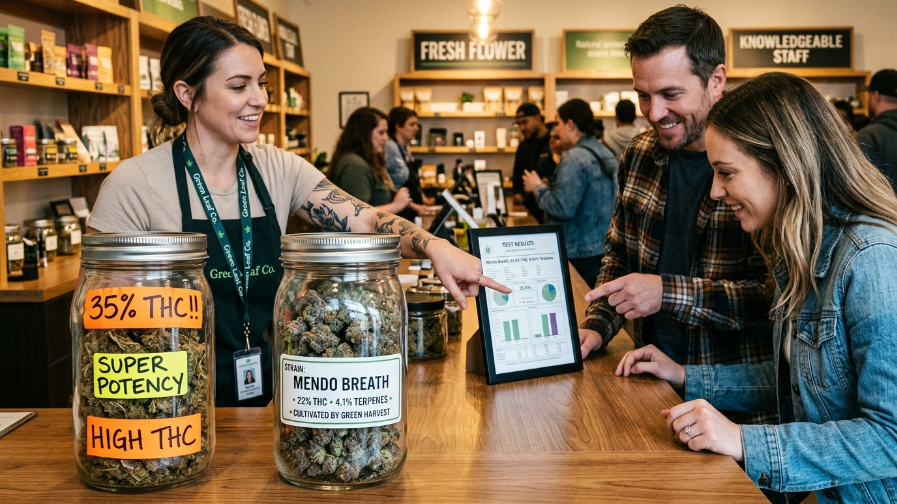
This singular obsession dictated everything. Growers were forced into an agricultural arms race to breed the highest THC plants possible, totally neglecting the other compounds. Back between 1995 and 2012, the DEA reported that the average THC in seized cannabis jumped from 4% to 12%. Today? Walk into any retail shop and you'll see flower claiming 35% THC and extract pens pushing past 90%. But does paying a premium for a product just because the box says 34% actually make sense anymore?
Spoiler alert: It doesn't. And the science finally backs up what experienced smokers have known for years.
Why THC Doesn't Tell the Whole Story (The Potency Paradox)
Let's get one thing straight: we aren't saying THC doesn't matter. It absolutely does. THC is the engine of the cannabis experience. It binds to the CB1 receptors in your brain and central nervous system, and it is the primary reason you feel psychoactive effects.
But having a massive engine means nothing if you don't have a steering wheel. That's the Potency Paradox. The commercial pursuit of extreme THC is based on a massive biological misunderstanding of the human body.
A landmark observational study out of the University of Colorado Boulder completely dismantled the "higher THC means a better high" myth. Researchers tested 121 regular users. Half smoked standard legal flower (16-24% THC). The other half hit highly concentrated extracts (70-90% THC). When they tested their blood, the extract users had massive, off-the-charts spikes of THC circulating in their bodies—more than double the flower smokers.
But here is where things get interesting. When the researchers tested their mood, balance, memory, and self-reported intoxication, both groups were basically on the exact same level. The people who hit the 90% concentrate were not magically "more high" than the folks smoking the 22% flower.
Why? Because of receptor saturation. Your brain only has so many CB1 receptors. Once you hit a certain threshold of THC, those receptors are totally maxed out. We call this the "ceiling effect." Adding more and more THC past that saturation point yields diminishing returns. It's biologically inert. If you don't have a robust terpene profile to modulate those receptors, the excess THC is just a waste of money.
What Are Terpenes?
So, if THC is maxing out our receptors, what actually controls the vibe of the high? Enter terpenes.
Terpenes are volatile, aromatic hydrocarbons produced in the sticky resin glands (trichomes) of the cannabis plant. Simply put, they are the essential oils that give weed its smell. If your bud smells like a skunk sprayed a pine tree, or if it smells like fresh lemons and diesel gas, you are smelling terpenes.
In nature, the plant produces these compounds as a defense mechanism to repel pests or to attract pollinators. But when humans inhale them, they do something incredible. For a long time, even the scientific community thought terpenes were just passive flavor agents. We thought they just made the smoke taste good. But groundbreaking research, including a massive 2021 study out of the University of Arizona Health Sciences, proved that terpenes are highly active pharmacological compounds.
They are what scientists call "cannabimimetic," meaning they actually mimic the biological activity of cannabinoids all on their own. They interact with your body to modulate, enhance, and steer the effects of the THC.
The Entourage Effect: Building the Perfect High
This biological synergy is known as the Entourage Effect. The term was coined back in 1998 by Israeli researchers and popularized by the legendary Dr. Ethan Russo. The concept is simple but revolutionary: the therapeutic and recreational effects of cannabis come from the whole plant working together, not just one isolated molecule.
Think back to the engine analogy. If THC is the engine providing the raw power, the terpenes are the steering wheel and the suspension. Without terps, a 90% THC distillate cart delivers what the community calls a "hollow high." It’s an empty, one-dimensional buzz that hits fast and fades fast, leaving you feeling cloudy but not truly stoned.
Dr. Russo explained the math of botanical synergy perfectly: "2 + 2, instead of equaling 4, gives you an 8 in terms of the benefit." When you combine THC with the right terpenes, they act as allosteric modulators—meaning they physically change how the THC binds to your receptors.
The Endocannabinoid System Cheat Sheet
| Receptor Type | Where It Lives | What It Controls | Binding Agents |
|---|---|---|---|
| CB1 (Central) | Central Nervous System (Brain, Hippocampus) | Psychoactivity, motor control, memory, appetite, pain. | THC, Alpha-Pinene, Linalool, Myrcene. |
| CB2 (Peripheral) | Immune System, Peripheral Tissues | Inflammation, immune response, physical pain (Non-intoxicating). | CBD, THC, Beta-Caryophyllene. |
As the market evolves, it's not just terpenes stepping into the spotlight. We are seeing a massive shift toward minor cannabinoids becoming the future of cannabis. Compounds like CBG, CBN, and THCV are joining forces with terpenes to create highly tailored, specific effects that pure THC simply cannot achieve on its own.
Meet the Molecular Architects
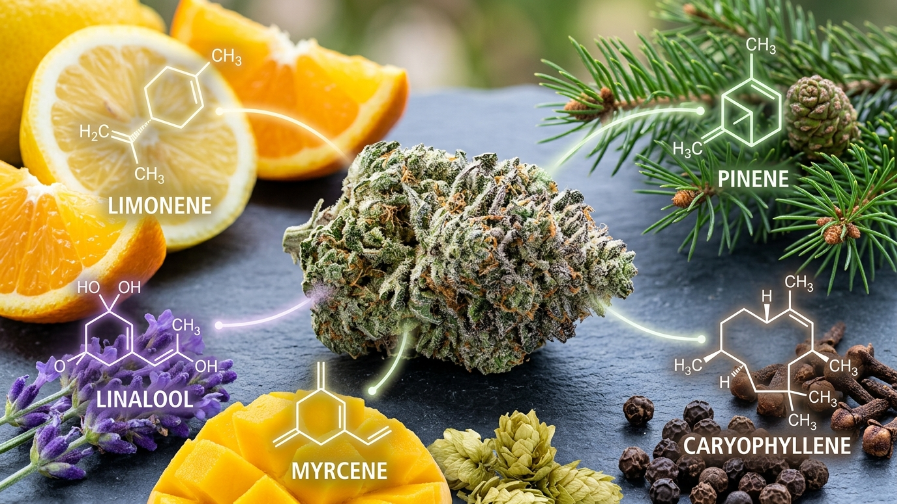
Cannabis produces over 200 distinct terpenes, but only a handful show up in concentrations high enough to really drive your high. When you look at a modern lab report, these are the heavy hitters you need to know.
Myrcene: The Barrier Breaker
Myrcene is the most abundant terpene in commercial weed, giving off an earthy, musky, clove-like aroma (also found in mangoes and hops). If you've ever smoked a joint and felt that heavy, warm blanket wrap around your body and lock you to the couch, you can thank myrcene.
Biologically, myrcene is a game changer because it increases the permeability of your blood-brain barrier. It physically opens the gates, allowing THC to rush into your central nervous system faster and more efficiently. That’s why myrcene-heavy strains hit you like a freight train and are highly prized for pain management and insomnia.
D-Limonene: The Anxiety Antidote
Smell fresh lemons, citrus rinds, or zesty grapefruit? That's limonene. Known for its mood-elevating and energizing effects, limonene is a savior for anyone who gets paranoid when they smoke.
A recent, highly rigorous study from Johns Hopkins University proved this. They gave participants heavy doses of THC, which naturally caused their anxiety and paranoia to spike. But when they gave those same participants THC combined with vaporized d-limonene, the feelings of panic dropped significantly. Crucially, the limonene didn't lower the THC in their blood—it just pharmacologically smoothed out the high, proving that terps can directly counteract the negative side effects of weed.
Alpha-Pinene: The Memory Saver
Pinene smells exactly like it sounds: fresh pine needles, evergreen forests, and rosemary. If you hate the "brain fog" that comes with getting stoned, you want pinene.
Pinene operates as an acetylcholinesterase inhibitor. In plain English: it stops your brain from breaking down the chemical responsible for memory formation and focus. By preserving that chemical, pinene cuts through the THC haze, keeping you lucid, sharp, and able to actually hold a conversation at a party.
Beta-Caryophyllene: The Dietary Cannabinoid
Found heavily in black pepper and cloves, caryophyllene brings a spicy, woody bite. It is totally unique in the terpene world because it actually acts like a cannabinoid.
Research published in the Proceedings of the National Academy of Sciences proved that beta-caryophyllene binds directly to your CB2 immune receptors. It triggers potent anti-inflammatory and pain-relieving effects without adding any extra psychoactive intoxication. It's the ultimate body-healer terpene. We're seeing a massive trend of users leaning toward these profiles; in fact, savory terpenes and landraces are completely taking over the market as people get sick of artificial, candy-flavored weed.
The Terpene Translation Guide
| Primary Terpene | Aroma / Flavor | The Real-World Effect |
|---|---|---|
| Beta-Myrcene | Earthy, musky, ripe fruit | Deep sedation ("couch-lock"), muscle relaxation, faster THC onset. |
| D-Limonene | Bright, zesty citrus | Mood elevation, kills THC-induced anxiety and paranoia. |
| Alpha-Pinene | Pine, evergreen, woody | Mental clarity, focus, fights short-term memory loss. |
| Beta-Caryophyllene | Spicy, black pepper | Body relief, heavy anti-inflammatory, no extra head-high. |
| Linalool | Lavender, floral, sweet | Profound relaxation, anti-convulsant, stress killer. |
The Great Indica vs. Sativa Lie
If we are going to talk about how terpenes drive the experience, we have to kill the biggest myth in cannabis history: the Indica vs. Sativa labels.
For years, budtenders have told us that Sativas give you a daytime, energetic head high, while Indicas put you "in-da-couch." It's completely false. Those terms were created in the 18th century by biologists just to describe how the plants looked and where they grew. Sativas were tall and skinny; Indicas were short and bushy from the mountains of Central Asia.
Today, virtually everything you smoke is a genetic hybrid. DNA testing has proven that there is zero biochemical difference between a commercial "Indica" and a "Sativa" that dictates your high. The only thing that determines how a strain makes you feel is its chemotype—the specific ratio of terpenes and cannabinoids it produces.
If an "Indica" puts you to sleep, you aren't feeling the shape of the plant's leaves; you are feeling the effects of a myrcene and linalool-dominant terpene profile. If a "Sativa" makes you clean your whole house, that's just limonene and pinene doing their job. This is why the chemovar revolution is changing how we classify cannabis, finally giving consumers a scientifically accurate way to predict their high.
Market Fraud: Lab Shopping and the "Sand" Problem
So, why are dispensaries still pushing 35% THC labels if the science says it doesn't matter? Because an uneducated market still buys it, which creates a massive financial incentive for corporate growers to lie.
This has led to a systemic crisis known as "lab shopping" and THC inflation. Cultivators know they can charge a premium for a 30% label, so they shop their harvest around to different independent testing labs until they find one willing to fudge the numbers. A major study in Colorado recently tested flower off retail shelves and found that 70% of the samples contained THC levels more than 15% lower than what was printed on the bag. Some had exactly half.
Botanists agree that the biological limit for a natural cannabis flower to produce THC is somewhere in the low-to-mid 30s. If you are buying a pre-roll or flower that claims 40% or 45% THC, you are either buying a faked lab result, or the grower dusted the bud in synthetic THC isolate (known in the industry as "sand") to artificially bump the numbers. Either way, you are getting ripped off.
How to Actually Read a Cannabis Lab Report (COA)
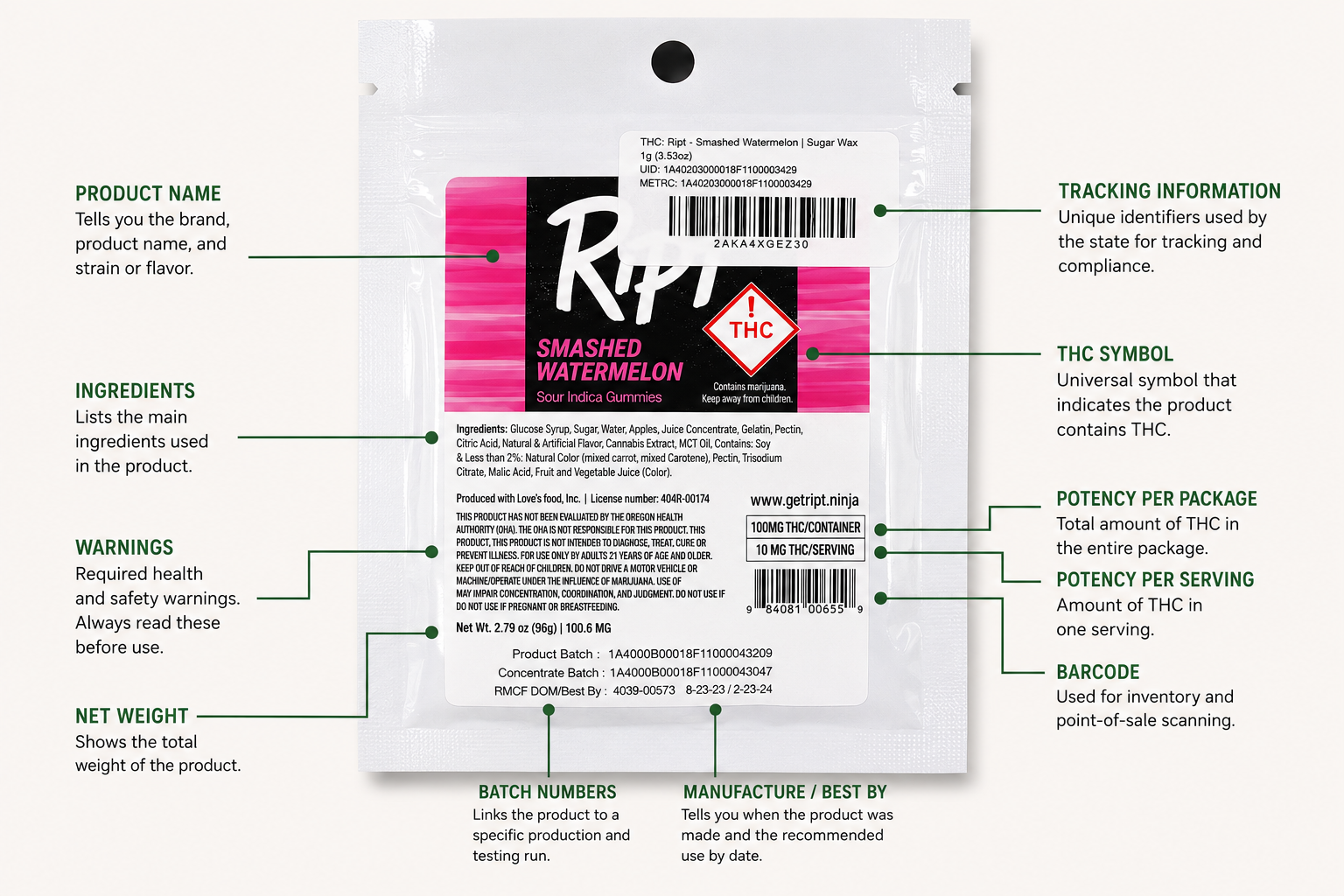
If you want to stop getting played by marketing, you need to learn how to read a Certificate of Analysis (COA). Any reputable brand will have a scannable QR code on the back of their packaging linking to this report.
- Look Past Total THC: Notice it, but don't base your purchase on it. Anything between 18% and 25% with a great terp profile will easily out-smoke a dead 32% strain.
- Check Total Terpenes: This is your new gold standard. You want a total terpene percentage of at least 1.5% to 2% for quality flower. Anything over 3% is absolute top-tier fire. If it’s under 1%, it’s going to taste like hay and give you a short, hollow high.
- Identify the Dominant Terps: Look at the top three listed. If you want to sleep, make sure Myrcene is #1. If you need to stay active, look for Limonene or Pinene at the top.
- Check the Harvest Date: Terpenes are highly volatile. They evaporate over time. If a jar has been sitting on a dispensary shelf for 8 months under hot lights, the THC might still be there, but the terps are gone. Always buy fresh.
Can Lower THC Actually Produce a Better Experience?
Absolutely. Think about it like this: would you rather have an incredible craft beer packed with complex flavors at 6% ABV, or a plastic jug of grain alcohol at 95% ABV? Both will get you intoxicated, but only one is actually an enjoyable experience.
A strain testing at 22% THC with a massive 4% terpene profile (rich in limonene and caryophyllene) is going to deliver a profound, long-lasting, deeply satisfying high. It hits all your receptors perfectly. Compare that to a stressed-out plant pushed to yield 33% THC but only holding 0.8% terpenes. That 33% will hit you fast, cause a quick spike in anxiety because there's no limonene to balance it, and then fade into a headache 45 minutes later.
The Future of Cannabis Shopping in 2026
The days of walking into a dispensary and just yelling, "Give me whatever has the highest THC!" are coming to an end. State regulators are finally catching on to the lab shopping fraud. States like California (through the DCC), Nevada, and Maryland are actively implementing strict, standardized testing protocols that force labs to use the exact same methods, killing the statistical wiggle room.
More importantly, regulations now heavily mandate that terpene profiles be listed clearly on packaging. The market is maturing. Consumers are getting smarter. We are realizing that the distillate vape carts—often made with cheap Botanically Derived Terpenes (BDTs) that taste like furniture polish—can't compete with the full-spectrum magic of Cannabis-Derived Terpenes (CDTs) found in live resin and high-quality flower.
Final Thoughts
The cannabis plant is a complex, beautiful biochemical factory, and treating it like a cheap THC delivery system is an insult to the culture and the science. THC will always be the engine, but the entourage effect is what actually takes you on the ride.
Next time you are at the dispensary, ignore the giant, bold-font THC numbers meant to bait rookies. Ask to see the COA. Look for the harvest date. Hunt for the terpenes that actually agree with your body. Stop chasing numbers, and start chasing the experience. Because in 2026, if you aren't smoking for the terps, you aren't really smoking.
BluntTalkzz Pro Tip: Your nose knows best. If your state allows deli-style smelling, trust your instincts. The human body is naturally drawn to the terpene profiles it needs. If a strain smells incredible to you, it's highly likely to give you a great high, regardless of what the THC percentage says.
Works Cited (Click to Expand)
This investigation is built on peer-reviewed pharmacological research, university studies, and regulatory data.
- University of Colorado Boulder. "Marijuana concentrates sharply spike THC levels but don't necessarily get users higher." (2020).
- Veriheal. "High THC Blood Levels Do Not Equal Increased Intoxication."
- NCBI / PMC. "Uncomfortably high: Testing reveals inflated THC potency on retail Cannabis labels."
- Russo, Ethan B. "Taming THC: Potential cannabis synergy and phytocannabinoid-terpenoid entourage effects." British Journal of Pharmacology (2011).
- University of Arizona Health Sciences. "Study Shows Cannabis Terpenes Provide Pain Relief, Contribute to 'Entourage Effect'." (2021).
- Johns Hopkins Medicine. "Researchers Show Chemical Found Naturally in Cannabis May Reduce Anxiety-Inducing Effects of THC." (2024).
- Proceedings of the National Academy of Sciences (PNAS). "Beta-caryophyllene is a dietary cannabinoid." (2008).
- Drexel University. "New Study Shows Clinical Evidence of the Entourage Effect as D-Limonene Mitigates Anxiety in Combination with THC." (2024).
- Department of Cannabis Control (DCC) California. "Standard cannabinoid test method and operating procedures." (2024).
- State of Nevada Cannabis Compliance Board. "Regulation 12: Packaging and Labeling of Cannabis Products."