


Deep Dive: Granny Candy
Granny Candy is exactly the kind of cannabis strain where the name starts making sense the moment you get close to the flower. Bred by Humboldt Seed Company and discovered as phenotype #65 during a massive 600-plant phenohunt with Errl Hill Extracts, this sativa-dominant hybrid was selected for its unmistakable nostalgic candy character.
The genetics are Mountaintop Mint × W. Runtz Muffin, and the finished flower brings a striking combination of old-school sweetness and modern high-potency genetics. Granny Candy typically tests between 25% and 30% THC, while the supplied information places total cannabinoids around 30–35%.
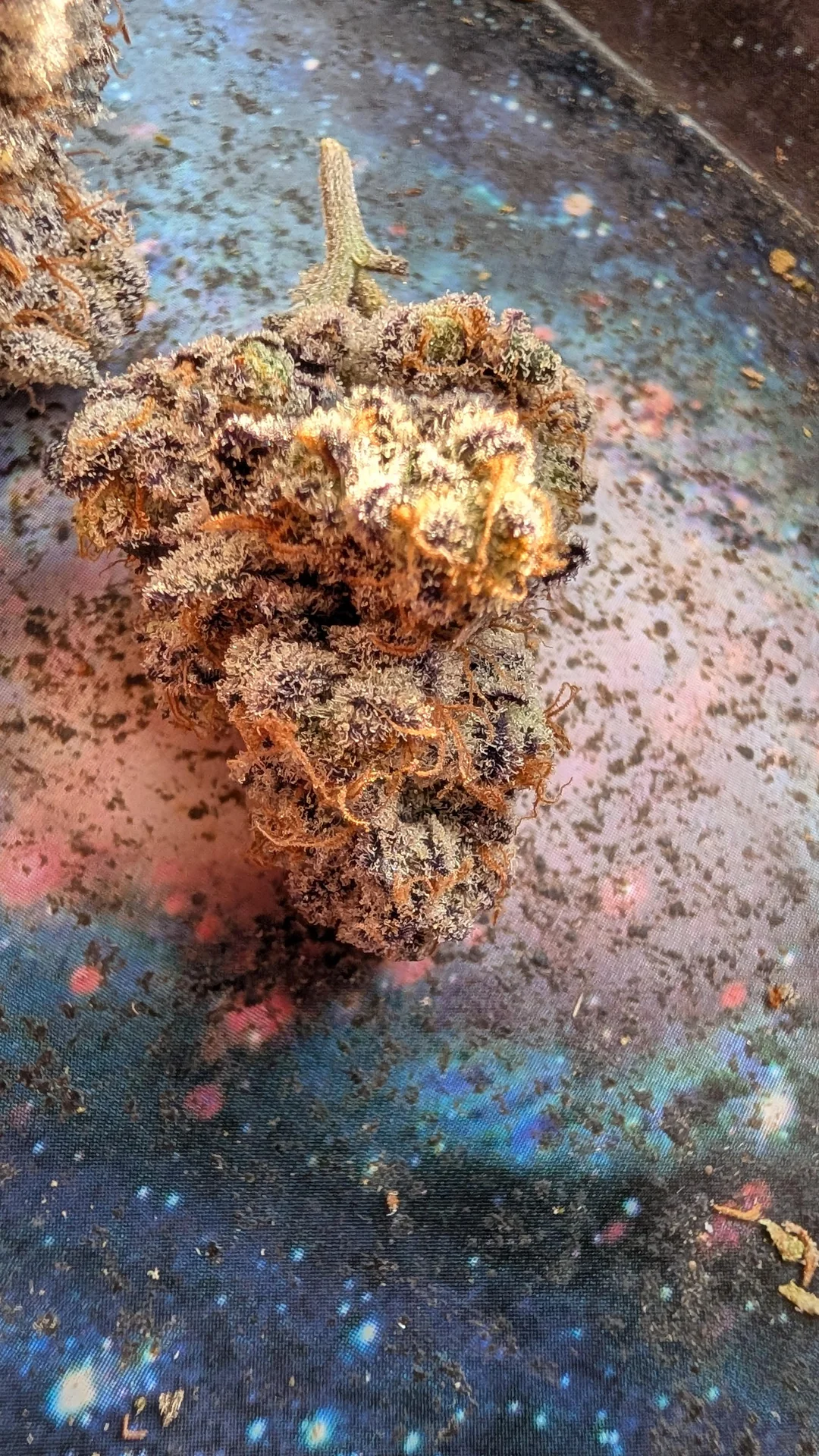
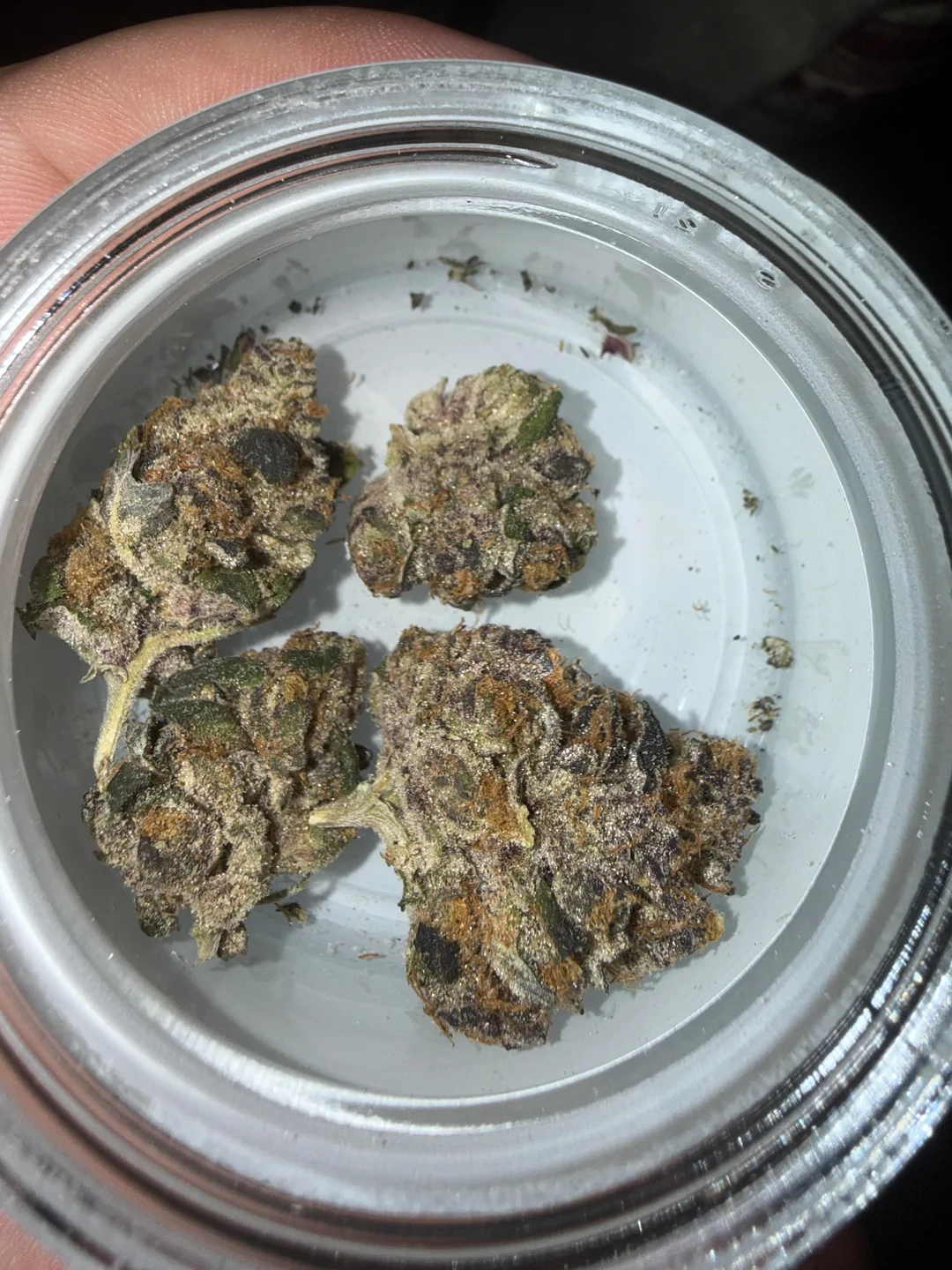
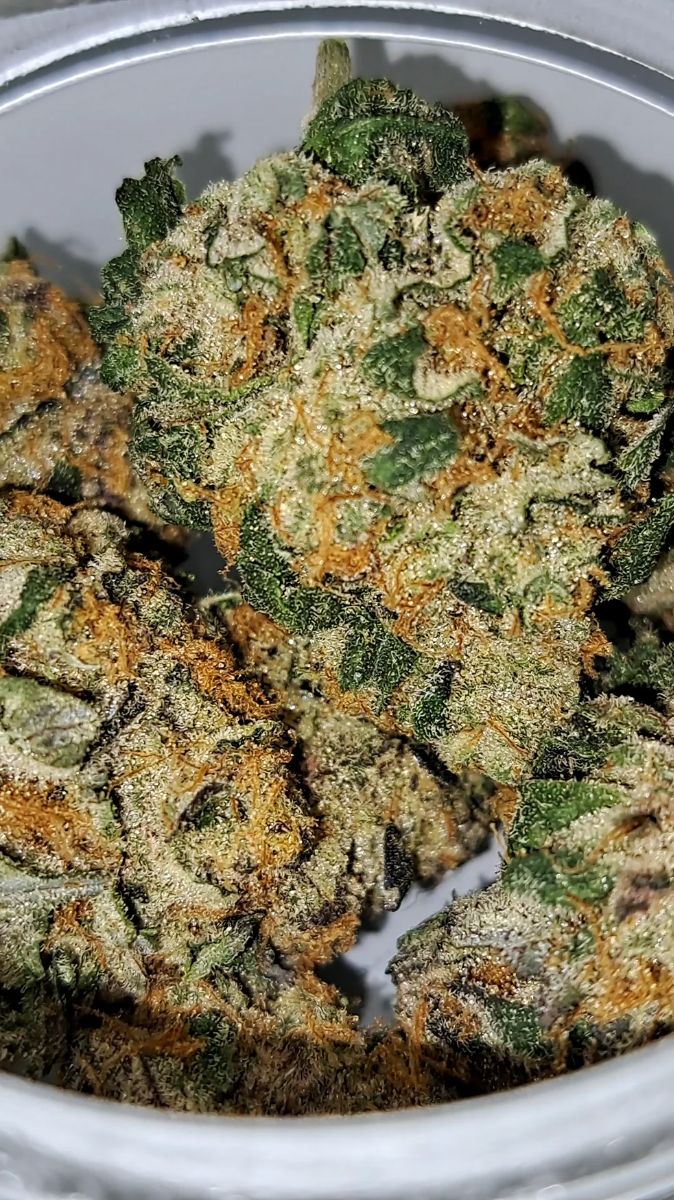
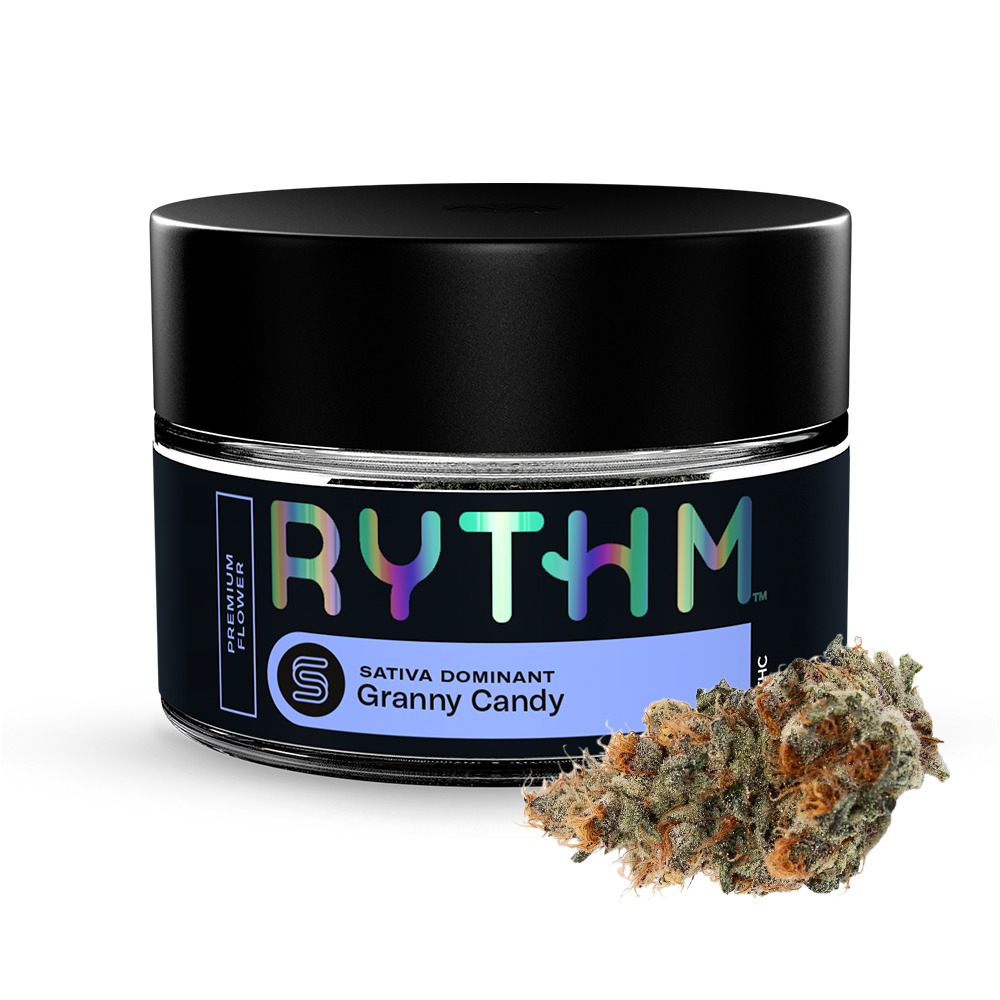
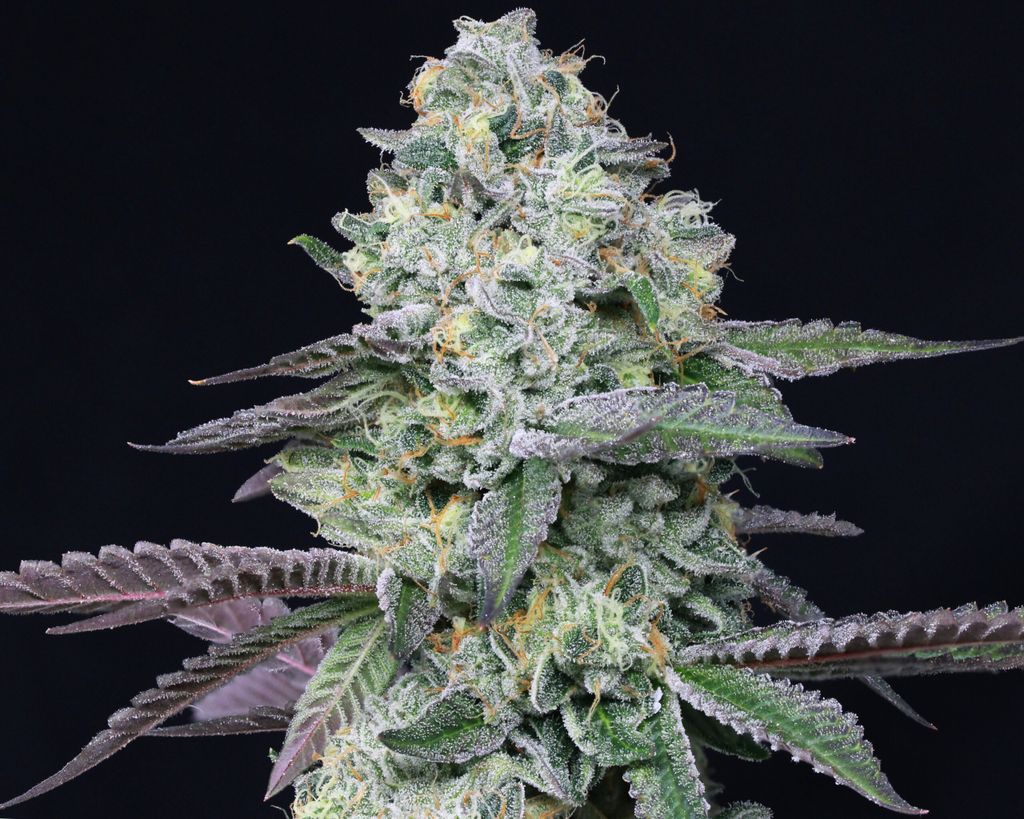
Visually, this is a serious bag-appeal strain. The buds develop into elongated, spear-like formations covered in an almost ridiculous layer of frosty trichomes. Depending on growing conditions, the flower can move between vibrant lime-and-olive green and much darker purple, red, magenta and deep-rose tones. Bright tangerine pistils provide another layer of contrast.
Then comes the aroma. Granny Candy delivers a powerful mixture of ripe strawberry, pineapple sherbet and sticky hard-candy sweetness, with grinding releasing an even louder fruit-punch character backed by classic skunk and gas.
The flavor keeps the candy theme going. Pineapple brightness arrives first, followed by a silky strawberry-bonbon sweetness and cotton-candy finish. Subtle mint and pepper notes add complexity, keeping the profile from becoming one-dimensional.
The reported effects are where Granny Candy really separates itself. The experience is described as uplifting, happy, clear-headed and social, with enough physical relaxation to take the edge off without immediately pushing the consumer toward couch-lock. That combination makes it particularly interesting for creative projects, daytime socializing and situations where relaxation and mental engagement are both desirable.
For growers, the supplied information describes Granny Candy as a high-yielding cultivar that performs well indoors, outdoors, in greenhouses and under light-deprivation setups, with an approximate 50–55-day flowering period.