
The Chemistry of the Loophole
Why Your THCA Flower is Just "Real Weed"
Politicians called it a loophole. The industry called it hemp. Chemistry calls it basic thermodynamics. We break down the science behind the most misunderstood cannabinoid in the market.
After years of THCa flower being so easy to grab online, and shipped right to your door! The Feds finally put an end to the implications of the 2018 farm bill, that turned the legal cannabis market into the wild west. Pounds of THCa flower being shipped from coast to coast, vape carts, and high milligram edibles, under the premise that it had to be 0.3 percent THC or less. This has turned into the biggest myth in the cannabis space, is THCa flower, real flower? As most weed smokers know by now, or should know, is that THCa needs to be activated by heat to get you high. Once the THCa is heated, it then turns into THC, delta 9 cannabis that indeed will get you ripped. As a certified weed smoker, I don’t understand why this debate is still raging on. Whether your nugs are 25% THC or 25% THCa does not matter. As long as your planning on burning the cannabis in a joint or a bong then it truly does not matter, but for the sake of argument we are still going to break down the science behind the chemistry.
There is still a lot of debate out there about the new legislation, and how the schedule III laws will affect the THCa market, or the cannabis market as a whole. In this article, Blunttalkzz is hoping to bring some clarity to the debate, and break down what the fuck is actually going on here!
Part 1: Exactly What is THCA Flower?
If you walked into a $28.4 billion industry and asked ten different people to define the product they're selling, you'd probably get ten different answers. To the government, it's hemp. To the dispensary owner losing market share, it's unregulated competition. But to a botanist or a chemist? It's just cannabis.
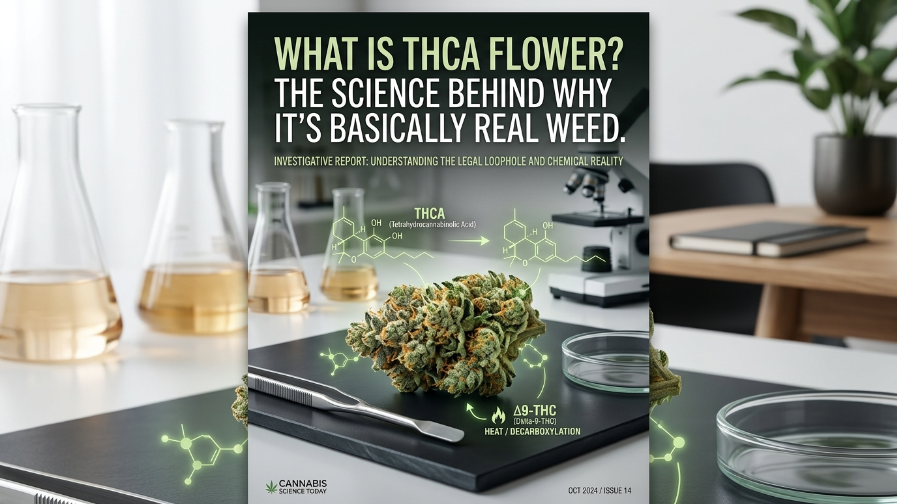
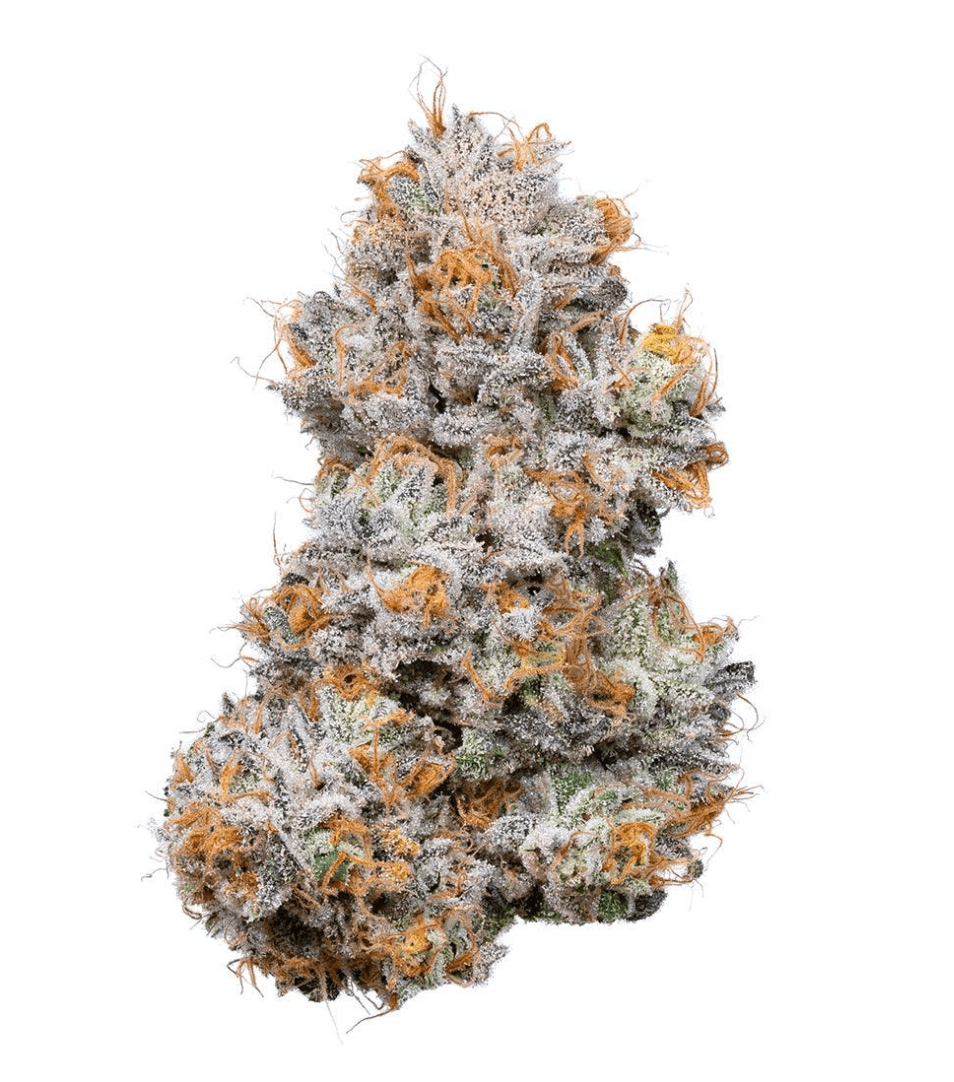
To really understand what is THCA flower, we have to look at the living plant. Cannabis sativa does not actually produce Delta-9 THC while it is growing. Let me say that again for the folks in the back: a living, breathing weed plant produces almost zero Delta-9 THC. Instead, the plant’s biological pathways synthesize acidic precursors inside those frosty, sticky trichomes.
The main precursor is Tetrahydrocannabinolic acid (THCA). In its raw, unheated form, THCA is completely non-intoxicating. You could literally eat a handful of raw, freshly harvested premium flower, and you wouldn't feel a damn thing (other than a stomach ache). THCA has an extra carboxyl group attached to its molecular structure, which makes the molecule too physically large to fit into the CB1 receptors in your brain and nervous system. It’s like trying to shove a square peg into a round hole.
This is why understanding the nuances of the plant is becoming so critical as the market matures. The modern consumer is getting smarter. As we noted when discussing how cannabis is done with candy why savory terpenes landraces and thcv are taking over in 2026, the culture is shifting away from basic "does it get me high" metrics toward a deep appreciation of the plant's raw, unadulterated chemical profile.
Part 2: The Chemistry of Decarboxylation
So, does THCA get you high? Directly? No. But the magic—and the entire legal loophole—lies in a simple chemical reaction known as decarboxylation. THCA flower explained correctly isn't about botany; it's about thermodynamics.
When you apply heat to THCA—whether by sparking a lighter, firing up a dry herb vaporizer, or baking it in an oven to make cannabutter—you induce a chemical reaction. The thermal energy causes the THCA molecule to drop that bulky carboxyl group. That carboxyl group releases into the air as carbon dioxide (CO2).
Once that carboxyl group is gone, the molecule instantly transforms into Delta-9 THC. Now, the molecule is the perfect shape and size to bind to your brain's CB1 receptors, delivering the classic euphoric intoxication that cannabis is famous for.
"Decarboxylation is the bridge between a non-intoxicating agricultural crop and the recreational cannabis experience. The plant grows THCA; humans create Delta-9 THC by setting it on fire."
This is why the whole "THCA vs Delta 9 difference" debate is structurally flawed when discussing flower that you intend to smoke. THCA is simply Delta-9 THC waiting for a spark. If you have "dispensary weed" and "THCA hemp flower," and both test at 25% THCA and 0.2% Delta-9 THC, they are chemically identical products.
Part 3: The 2018 Farm Bill & The Multi-Billion Dollar Typo
How did we get here? How did a country that still federally outlaws marijuana suddenly allow millions of pounds of high-grade cannabis to be shipped through the USPS? It all traces back to the Agriculture Improvement Act of 2018 (the Farm Bill).
Lawmakers wanted to legalize industrial hemp to be used for rope, textiles, and CBD products. So, they created a legal definition: "hemp" is any Cannabis sativa L. plant with a Delta-9 THC concentration of not more than 0.3 percent on a dry weight basis. Anything over 0.3% Delta-9 THC remained federally illegal "marijuana."
The problem? They only specified Delta-9 THC. They completely ignored THCA.
Because the plant naturally grows THCA and not Delta-9 THC, clever cultivators realized they could grow potent, high-quality cannabis genetics, harvest them carefully, and send them to a lab. As long as the lab tested the flower in its raw, unheated state (often using high-performance liquid chromatography, or HPLC, which doesn't apply heat), the Delta-9 THC levels would read well below the 0.3% limit.
Boom. Legally, it was classified as "hemp." But practically, it was top-shelf weed. This legislative oversight spawned a parallel cannabis economy. By the mid-2020s, the intoxicating hemp sector reached a massive valuation of $28.4 billion, supporting over 300,000 jobs and generating roughly $1.5 billion in state tax revenue. It became a gold rush.
Part 4: The Math of the High — The Total THC Calculator
If THCA converts to THC, how do you know how strong your weed actually is? This is where the total THC calculator comes into play. You can't just assume 25% THCA equals 25% Delta-9 THC. When you burn off that carboxyl group (CO2), you lose physical weight from the molecule.
The molar mass of THCA is 358.47 g/mol. The molar mass of Delta-9 THC is 314.46 g/mol. If you divide the mass of THC by the mass of THCA (314.46 ÷ 358.47), you get 0.877.
That means for every gram of THCA you heat up, you will yield a maximum of 87.7% of that weight in Delta-9 THC. The other 12.3% floats away as carbon dioxide gas. This isn't stoner math; this is the universally accepted, scientifically mandated total THC formula used by the USDA, the DEA, and every accredited testing lab in the country.
The Official Total THC Calculator
Use this formula to find the actual potency of any flower, whether bought online or at a state dispensary.
Real-World Example:
Let's say you buy a legal jar of "Hemp THCA Flower" and read the Certificate of Analysis (COA):
- THCA: 24.0%
- Delta-9 THC: 0.2% (Legal under the 0.3% Farm Bill limit)
The Math:
- Multiply the THCA by 0.877:
24.0 × 0.877 = 21.048% - Add the existing Delta-9 THC:
21.048 + 0.2 = 21.248%
Result: Your legal "hemp" flower is actually a potent 21.2% Total THC cannabis strain.
The total THC formula proves exactly why the "real weed vs fake weed" debate is nonsense. If you walk into a licensed dispensary in California, Colorado, or New Jersey and look at the back of a premium $60 eighth, the label will do this exact same math. The dispensary weed is THCA flower, too.
Part 5: Reddit-Proof Skepticism (Answering the Haters)
Spend five minutes on Reddit threads discussing THCA legality, and you will run into fierce, confident skeptics. Let's address the most common arguments directly using science.
"Isn't THCA flower just CBD weed sprayed with chemicals?"
False. You are confusing THCA flower with Delta-8 THC. Delta-8 is typically synthesized from hemp-derived CBD using harsh acids and then sprayed onto CBD flower. THCA flower is naturally grown. The plant genetically produces high levels of THCA on its own. Now, if you are looking into what are infused pre-rolls and how are they made, you might find flower rolled in THCA isolate powder or distillate to boost potency, but the raw THCA flower itself is not "sprayed" with synthetic chemicals.
"If it gets you high, why isn't it just sold as weed?"
Taxes and legal monopolies. State-licensed dispensaries hate the THCA market because hemp companies don't have to pay the exorbitant licensing fees and state cannabis taxes. Selling it as "hemp" is a legal arbitrage strategy to bypass the heavily taxed and artificially restricted dispensary system.
"Dispensary weed is Delta-9, THCA weed is different."
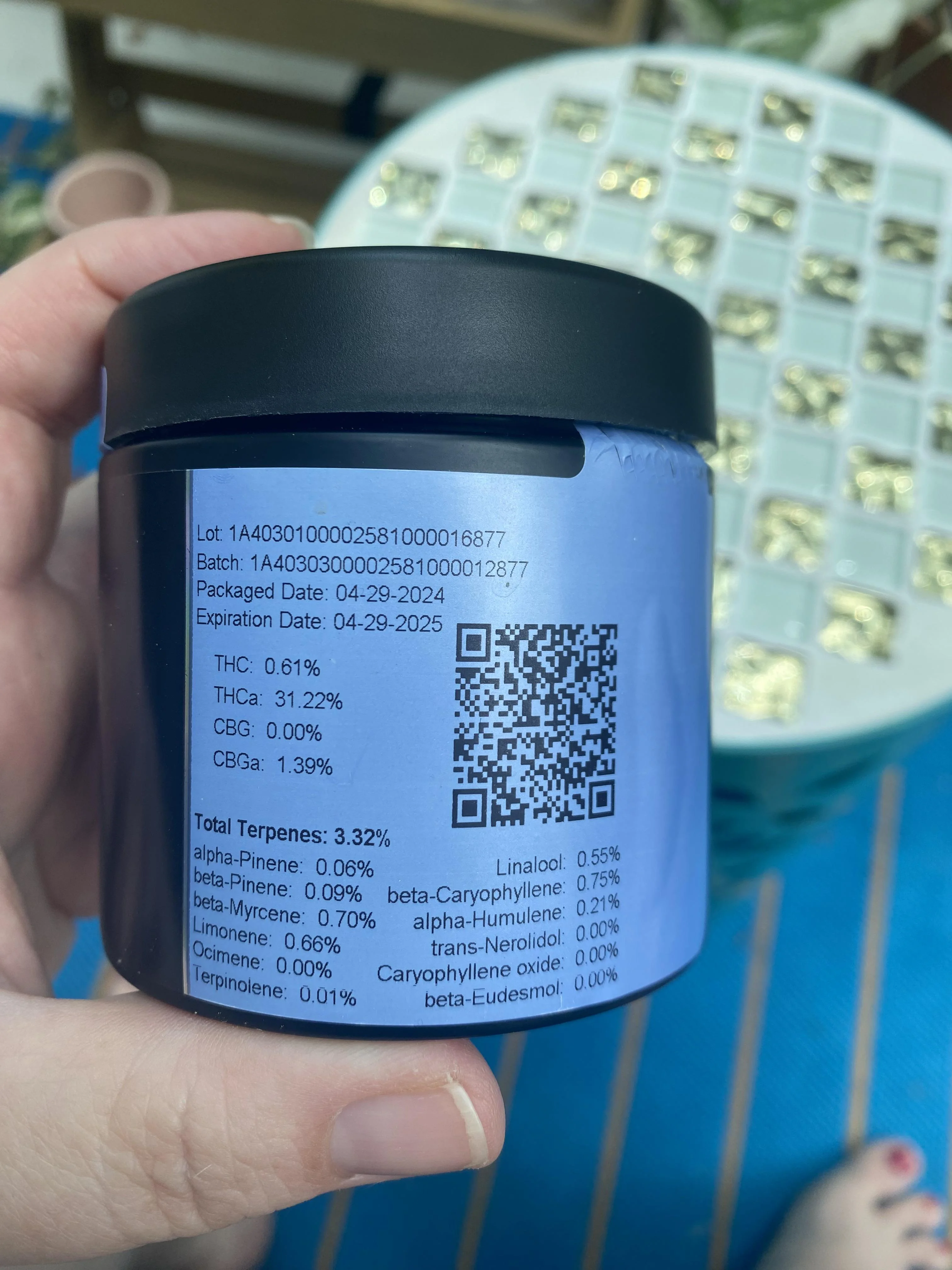
Check the COA. Go to your local legal dispensary. Look at the lab test for their most potent strain. You will almost always see: THCA ~20-30% and Delta-9 THC ~0.5-1.5%. Because state legal markets test post-harvest without the strict 0.3% federal limitation, they don't care if the D9 ticks up to 1%. But fundamentally, 95% of the intoxicating power in dispensary weed is sitting there in the form of THCA. It's the exact same chemical makeup.
Part 6: The Law Claps Back (New Jersey & The Future)
The government eventually realized they left the back door wide open. In recent years, the DEA and the USDA started tightening the screws, clarifying that testing must account for decarboxylation. Furthermore, individual states launched aggressive campaigns to shut down the intoxicating hemp market to protect their state-licensed dispensaries.
Take New Jersey, for example. The state tried to crush the THCA and intoxicating hemp market by passing Bill A6295/S3235, which aimed to strictly ban the sale of intoxicating hemp products outside of licensed cannabis dispensaries. However, in October 2024, a major legal bombshell dropped: Loki Brands v. Platkin.
A federal judge in the U.S. District Court for the District of New Jersey struck down key parts of the state's new law. The court ruled that New Jersey's attempt to criminalize the transport and handling of hemp products that complied with the 2018 Farm Bill was preempted by federal law. Essentially, the judge said a state cannot make it a crime to move a federally legal agricultural commodity.
But the writing is on the wall. As the federal government moves toward rescheduling cannabis to Schedule III, the regulatory landscape is shifting beneath everyone's feet. The mail-order loophole that allowed pounds of premium THCA flower to fly through the postal service is facing severe existential threats. As we covered recently, the THCA gold rush is ending the 10 brands consumers still trust in 2026 will be the ones that navigate these new legal gauntlets transparently and safely.
Part 7: The Practical Consumer Takeaway
So, where does this leave you, the consumer? Armed with the truth.
When you are shopping for hemp THCA flower or dispensary weed, the marketing on the front of the bag is largely irrelevant. The truth lives on the back of the package, inside the QR code linking to the Certificate of Analysis (COA). Here is your checklist for buying responsibly:
- Look for Full Panel Testing: Don't just look at the cannabinoids. Ensure the product has been tested for heavy metals, pesticides, and microbial contaminants (like mold).
- Do the Math: Use the Total THC calculator. Don't be fooled by inflated numbers. If a vendor claims "40% THCA flower" without infused isolate, they are likely lying or doctoring labs. Biological limits of the plant generally max out around 30-35% Total THC.
- Understand the Harvest Timing: Hemp growers harvest early and cure carefully in cold environments to prevent THCA from naturally degrading into Delta-9 THC (which would push them over the 0.3% legal limit). A quality vendor knows how to cure properly without sacrificing terpenes.
Table 1: The Blunt Truth - THCA Hemp vs. Dispensary Weed
| Feature | "Farm Bill" THCA Flower | State Licensed "Dispensary Weed" |
|---|---|---|
| Primary Intoxicating Compound | THCA (Pre-combustion) | THCA (Pre-combustion) |
| Delta-9 THC Limit (Raw) | Must be ≤ 0.3% | Usually 0.5% - 2.0% (No strict limit) |
| Taxes & Pricing | Standard sales tax, highly competitive pricing | Heavy state cannabis taxes, limited competition |
| Legality Framework | 2018 Farm Bill (Agricultural definition) | State-specific Medical/Recreational laws |
| The High (Post-Combustion) | Identical (Delta-9 THC) | Identical (Delta-9 THC) |
Conclusion: Respect the Chemistry
The debate over whether THCA flower is "real weed" or a "diet loophole" is over. Chemistry has settled the score. The plant grows THCA; heat transforms it into Delta-9 THC. It doesn't matter if the plant was grown under a state dispensary license or an agricultural hemp permit. If the genetics are cannabis, and the dominant cannabinoid is THCA, you are smoking marijuana.
The 2018 Farm Bill didn't create a synthetic alternative to cannabis. It accidentally legalized the exact same plant by drawing an arbitrary line at a cannabinoid (Delta-9) that the living plant barely even produces. As lawmakers scramble to rewrite the rules, and as federal agencies crack down on the grey market, the consumer needs to stay sharp.
Read the labs. Do the math. Understand the thermodynamics. Because whether the government calls it hemp or marijuana, the fire in your lighter treats it exactly the same.