
An Investigative Smoker’s Guide to Lab Fraud, "Zombie Weed," and the Numbers That Don’t Add Up.
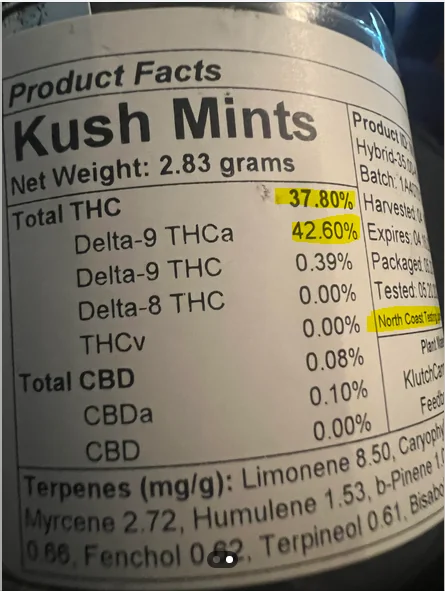
We’ve all been there. You walk into the dispensary, scan the top shelf, and your eyes lock onto that one jar. It’s sitting there, shimmering under the LED lights, boasting a massive "32.4% Total THC" sticker. You pay the "super-premium" tax, head home, and spark up—only to find that it hits like a wet paper towel. The smell is muted, the taste is like hay, and you’re left wondering: How can something this strong feel so weak?
The truth is, the number on the jar is a receipt, not a guarantee. In the modern cannabis market, we are living through a "Crisis of Credibility." While legalization promised us safety and transparency, the reality on the ground is a high-stakes game of "potency inflation." Driven by a market that treats THC percentages like a video game high score, a "pay-to-play" relationship has formed between cultivators and testing labs.
In this BluntTalkzz investigation, we’re going behind the curtain of the laboratory to show you exactly how the science is being cooked. From moisture manipulation to the "Golden Sample" bias, we’re breaking down why you can’t trust the sticker, and how to spot the real heat in a market full of noise.
Part 1: The Math Behind the High (THCa vs. THC)
To understand the fraud, you have to understand the chemistry. Most people don't realize that the cannabis plant doesn't actually grow Delta-9 THC. It grows THCa (Tetrahydrocannabinolic acid), which is non-intoxicating. It only becomes the THC that gets you high through decarboxylation—aka adding heat.
But here’s the kicker: when you convert THCa to THC, you lose mass. Specifically, the molecule loses its carboxyl group (CO2). This process is governed by a strict mathematical conversion factor: 0.877.
The Formula for Truth:
$\text{Total THC} = (\text{THCa} \times 0.877) + \text{Delta-9 THC}$
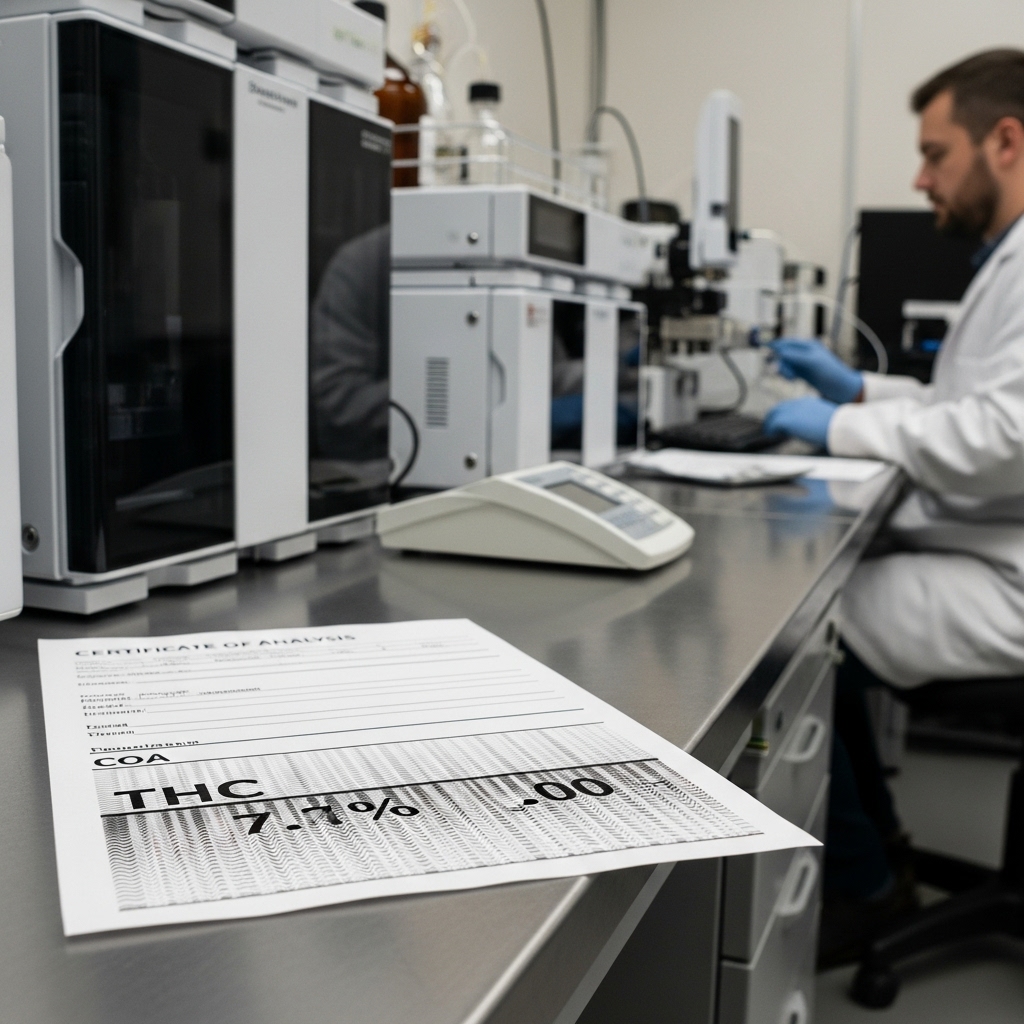
Unscrupulous labs and brands often play "reporting games" here. Some COAs (Certificates of Analysis) will simply add the two numbers together ($30\% \text{ THCa} + 1\% \text{ THC} = 31\%$), which is scientifically impossible once you spark it up. You are effectively being sold a "theoretical maximum" that you will never actually experience. In the real world, your joint or vape isn't 100% efficient at converting that THCa, meaning that 30% on the bag is likely closer to 20% in your lungs.
Part 2: The Inflation Playbook (How They Cook the Books)
If the math doesn't get you, the moisture will. This is the biggest "legal" loophole in the game. Most states require potency to be reported on a "dry weight basis." This is meant to standardize tests, but it has become a vector for manipulation.
The Moisture Manipulation
Cannabis is biological matter; it contains water. If a lab mathematically removes all the water from a sample, the THC concentration looks higher. If a lab is "friendly," they might aggressively dry the sample or manipulate the calculation to reflect 0% moisture—something that is biologically impossible for smokable flower (which needs about 10-12% moisture to not crumble into dust). By driving that moisture number down, they can artificially boost potency by 10-15%.
Sampling Bias: The "Golden Sample"
A harvest batch can be hundreds of pounds. When it comes time for testing, regulators ask for a "representative sample." But who’s checking? Cultivators often send the "Golden Sample"—the frostiest, most resinous top colas that sat right under the lights—to the lab. The lab tests that nug, and its 30% result is then applied to the entire 50-lb batch of lower-potency "popcorn" buds.
Kief Dusting: The "Sandy" Secret
The most flagrant form of fraud is "kiefing." Some bad actors will literally roll their test samples in kief (loose trichomes) before sending them to the lab. This coats the buds in pure cannabinoid resin, causing the numbers to spike into the high 30s. While honest labs use microscopes to spot this stacked, unnatural resin, "friendly" labs look the other way to keep the client happy.
Part 3: The Economics of "Price Per Point"
Why do labs do this? Simple: Survival.
In mature markets, wholesale prices are tiered based on THC percentage. This is called "Price Per Point" pricing. A batch that tests at 19% THC might sell for $800 a pound. If that same batch tests at 24%, the price jumps to $1,100.
| THC Range | Classification | Wholesale Impact | Market Perception |
|---|---|---|---|
| < 15% | Low Potency | Sold for extraction | "Mids" - hard to sell |
| 15% - 19% | Standard | Baseline pricing | Budget-tier |
| 20% - 24% | Premium | +$200/lb | The "Sweet Spot" |
| 25% - 29% | Top Shelf | +$500/lb | Highly desirable |
| 30%+ | Super Premium | +$1000/lb | "The Unicorn" |
If a cultivator chooses an honest lab and gets 19%, they lose thousands of dollars compared to using a lab that will "find" a way to give them 24%. This creates a "race to the bottom." Honest labs go out of business because they don't give the high numbers, while the inflating labs get all the contracts. It’s a systemic incentive for fraud.
Part 4: "Zombie Weed" and the Health Risks
This isn't just about being ripped off on price. The practices used to hide low-quality weed can actually be dangerous. When cannabis fails for mold or yeast, many states allow for "remediation." This usually involves blasting the flower with ozone or radiation.
While this kills the mold, it also creates radiated weed—or what we call "Zombie Weed." The mold is dead, but the toxic mycotoxins may remain. More importantly, the radiation destroys the terpenes, leaving the flower brown, odorless, and dry. To hide this "Zombie" status, producers rely on that 30% THC sticker to convince you it’s still premium.
Furthermore, to hit those impossible numbers, some growers use synthetic Plant Growth Regulators (PGRs). PGR weed is easy to spot: it’s rock-hard, covered in excessive orange hairs, and has almost no smell because the chemicals inhibit terpene production.
Part 5: The Reddit Files – Crowdsourced Truth
While regulators are slow to act, the community on Reddit has been ringing the alarm for years. Forums like r/trees and r/NJMarijuana are full of "vigilante testers" who are sending their own dispensary purchases to independent labs.
In several viral threads, users have shown that flower labeled at 34% actually tested at 18% when verified by a second, neutral lab. The consensus is shifting: The number is a lie. Enthusiasts are now moving toward "Terps > THC," realizing that a loud, smelly 18% strain hits much harder than a muted, "Zombie" 32% strain due to the Entourage Effect.
Even as cannabis rescheduling looms on the horizon, federal oversight is still a long way off. For now, the "smoker's nose" is the most reliable piece of testing equipment on the market.
Part 6: A Smoker’s Guide to Detecting Fraud
So, how do you protect yourself? Here is your field guide to spotting the "Unicorns" from the "Fakes."
1. Read the COA (Certificate of Analysis)
- The Date: If the test is more than 6 months old, the THC has likely degraded into CBN. You’re buying "sleepy" weed, not "high-potency" weed.
- LOQ (Limit of Quantitation): If the lab has a high LOQ for pesticides or mold, it means their machines aren't sensitive enough to find them. It's a "Don't Look, Don't Find" strategy.
- Terpene Data: If the label doesn't list terpenes, or if they are below 1%, it's a huge red flag. Real top-shelf weed should be between 2-4% terpenes.
2. The "Nose Knows" Test
If a bag claims 30% but smells like hay, lawn clippings, or nothing at all—put it back. High cannabinoid production usually goes hand-in-hand with high terpene production. A "silent" 30% nug is almost always a result of remediation or lab fraud.
3. Visual Inspection
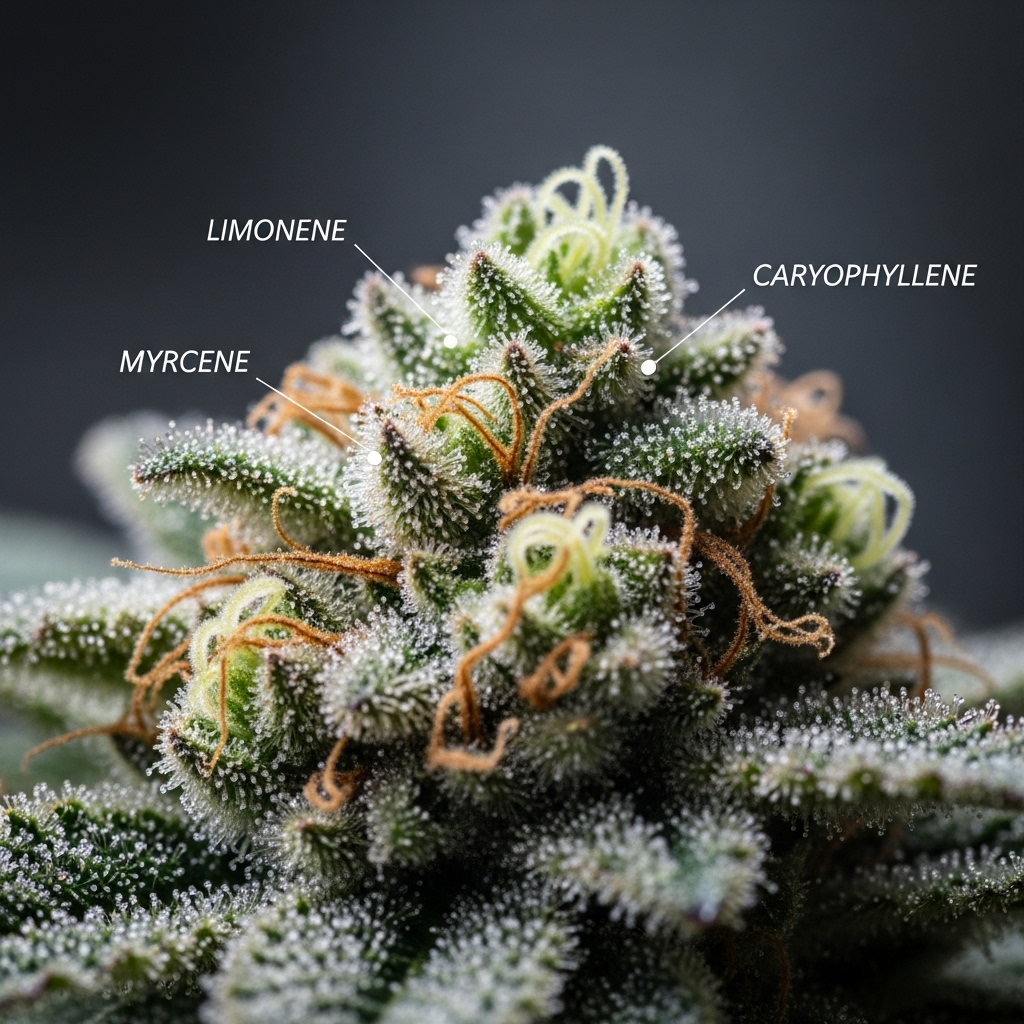
Use your phone's macro lens. Trichomes should look like tiny mushrooms with heads and stalks. If the crystals look like flat sand or dust without stalks, the bud might have been tumbled in kief to spike the test.
4. Beware the "Infused" Label
Many brands are now using THC drinks or distillate sprays to "enhance" their flower. Unless you’re specifically looking for moonrocks, avoid flower that has been "sprayed" to pump up the numbers. It’s usually masking low-quality, old product.
Conclusion: Empowerment, Not Cynicism
The potency wars are a symptom of a young industry finding its feet. As regulations tighten in states like California and Washington, and as standardized testing becomes mandatory, the "35% Unicorns" will slowly disappear.
Until then, don't be a victim of the sticker. Quality isn't a single number; it's an experience. It’s the complexity of the flavor, the smoothness of the burn, and the nuance of the high. Opt out of the "highest number" game and start following your senses. Trust the plant, trust your nose, and remember: A loud 18% beats a silent 32% every single time.
Works Cited
- Four ways to solve the potency inflation problem - StratCann, Jan 2026.
- Shopping for cannabis testing labs | C&EN Global Enterprise - ACS Publications.
- West Coast Cure Lawsuit: Contaminated Products & Lab Fraud Claims, 2024.
- LA Times: The dirty secret of California's legal weed, June 2024.
- THCA vs. THC on Lab Results: How to Read COAs - thisthat CBD.
- Confidence Analytics: Why 0.877? The chemistry of decarboxylation.
- Praxis Laboratory Suspension Report - Washington State LCB, 2020.
- Plumlee v. Steep Hill Inc. - RICO Lawsuit, Arkansas Federal Court.
- Safe Leaf Consumer Advocacy Report on Microbial Failures, July 2025.